The Short Version: Your Seller Checklist
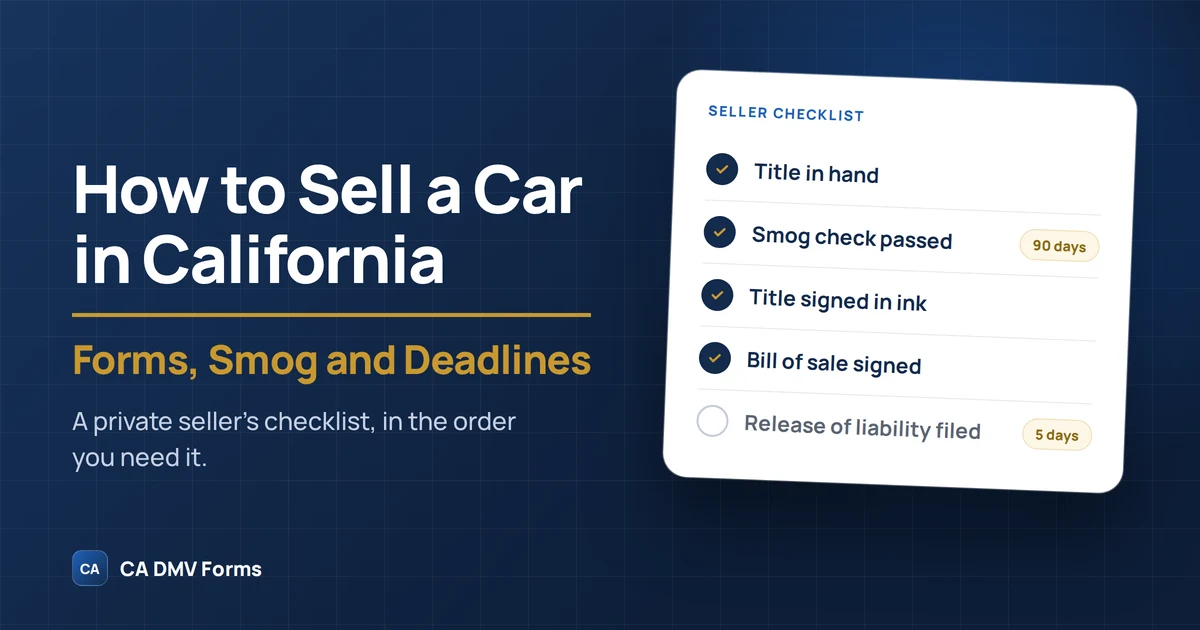
Knowing how to sell a car in California mostly comes down to paperwork, and the paperwork is shorter than most people expect. Seven things need to happen, and two of them have deadlines that catch sellers off guard. Here they are in the order you’ll do them.
- Find your title (the pink slip), or pay off your loan so your lender releases it.
- Get a passing smog check within 90 days of the sale, unless your car is exempt.
- Sign the title in ink and fill in the odometer reading.
- Sign a bill of sale. REG 135 covers it on one page.
- File your release of liability with REG 138 within 5 calendar days.
- Decide what happens to personalized plates before the buyer drives away.
- Cancel your insurance only after you’ve been paid and the car has left.
Start With the Title and Any Loan
The title proves you own the car, and the buyer can’t register it without your signature on it. Check three things before you post the listing.
- The title is in your name. The name on it should match your driver license.
- You can actually find it. If it’s lost or damaged, apply for a duplicate with REG 227 now. Duplicates take a few weeks, so ask before you have a buyer waiting.
- No lender is holding it. If you still owe money, your lender keeps the title until the loan is paid. Call them, ask how they release it, and plan the sale around that timeline.
A buyer who asks to “just take the car and get the title later” is a warning sign. Without the signed title in hand, you’re still the owner on paper.
Smog Check: Your Job, Not the Buyer’s
California puts the smog check on the seller. The car needs a passing result from within 90 days of the sale, and you give the buyer a copy of the inspection report. The station sends the result to DMV electronically. Prices vary by station, so it pays to call around.
Some cars skip the smog check at sale:
- Gasoline, hybrid, and alternative fuel cars that are four model years old or newer. DMV collects a smog transfer fee during the title transfer instead.
- Gasoline cars from model year 1975 and older.
- Diesel cars from model year 1997 and older, and diesel vehicles over 14,000 pounds gross weight.
- Electric vehicles and motorcycles.
- Transfers between certain close family members.
If your car fails, fix it before you sell it. A private buyer in California can ask for the passing report, and a failed one doesn’t count. Get a repair quote early and price the car with that cost in mind.
Signing the Title Without Mistakes
Title mistakes cause more delays than anything else, because a corrected title often means a trip to DMV. Follow these rules.
- Use ink, and never cross anything out. White-out and scribbles can void the title.
- Check how the owners are listed. If two names are joined by “AND,” both owners sign. If they’re joined by “OR,” either one can.
- Don’t hand over an open title. That’s a signed title with the buyer’s name and the sale details still blank. It leaves you tied to whatever the next person does with the car.
- Fill in the odometer section. Write the mileage exactly as the odometer shows it, with no tenths. Federal law requires this on most newer vehicles, and it protects you if someone later disputes the mileage.
Some titles have no odometer section, or the section is already full. In that case, the odometer disclosure on REG 262 covers it. DMV prints that form on secure paper, so you pick it up at an office instead of printing it at home.
Do You Need a Bill of Sale?
For most private sales, DMV doesn’t require one. Get one anyway. A bill of sale is your proof of the sale date, the price, and the condition you sold the car in, and it’s the first thing you’ll reach for if a ticket or a dispute shows up months later.
REG 135 records the seller, the buyer, the vehicle, and the price on a single page. Add a line saying the car is sold as is, have both people sign, and keep a copy each. If you’re giving the car to a family member, enter the gift value and your relationship instead of a price.
File Your Release of Liability the Same Day
This is the step sellers skip, and it’s the one that causes the most trouble later. REG 138, the Notice of Transfer and Release of Liability, tells DMV the date you stopped owning the car. After that date, parking tickets, toll bills, and other claims tied to the car belong to the new owner, not you.
You have 5 calendar days from the sale, and weekends count. File it online at dmv.ca.gov. It’s free, and you get an on-screen confirmation right away. A paper form sent by mail gives you no confirmation at all, so online is the safer route.
Two things to remember. This notice doesn’t transfer the title, because only the buyer’s application does that. And you still need to file it even if you traded the car in at a dealership. Save the confirmation page or screenshot it, because that’s your proof if a notice for the car ever lands in your mailbox.
Plates, Insurance, and Registration
Standard plates stay with the car. In California the plates belong to the vehicle, so don’t take them off a regular plate sale.
Personalized and special interest plates are yours. You can move them to another vehicle, hold onto them for later, or release them to DMV. Holding them without putting them on a car can carry an annual fee, and the choice goes on REG 17. Decide before the sale and remove the plates before the buyer leaves.
Cancel your insurance after the handoff. Wait until you have the money, the paperwork is signed, and the car is gone. Canceling early leaves you uninsured while the buyer is still driving off your lot. If you’re buying another car, ask your insurer about moving your coverage over.
Leave the registration alone. The buyer registers the car in their name. If the registration has expired, late fees come due when they do, so expect that to come up in price talks.
What the Buyer Has to Do, and Why It Matters to You
The buyer has 10 days to send DMV the signed title and the transfer fee, and they also pay use tax based on the price. Late penalties fall on the buyer, but a slow buyer still leaves your name on the record until the transfer goes through. That gap is exactly why your release of liability matters.
Before you hand the title over, take a clear photo of both sides of it. Tell the buyer about the 10-day deadline too. A buyer who knows the deadline is a buyer who finishes the job.
Special Situations
- Selling or trading in to a dealer. File REG 138 yourself. Don’t assume the dealer reports the sale for you.
- Giving or selling to a family member. Enter the gift value and your relationship on the bill of sale. Some family transfers are exempt from smog, and the buyer may qualify for a use tax exemption using a Statement of Facts (REG 256).
- Selling after a total loss. Your insurer may ask you to sign Section 5 of REG 262 so they can finish the transfer paperwork for you.
- Selling to someone out of state. You still file your release of liability and keep your bill of sale, even though the buyer registers in their own state.
Mistakes That Cost Sellers Money
- Waiting for the buyer to register before filing the release of liability
- Handing over a signed title with the buyer’s details left blank
- Letting the 90-day smog window run out while the car sits listed
- Using white-out or crossing out an error on the title
- Canceling insurance before the money clears
- Skipping the bill of sale, or not keeping a copy
- Forgetting to move or release personalized plates
Frequently Asked Questions
Do I need a bill of sale to sell a car in California?
DMV doesn’t require one for most private sales, but you should still make one. It proves the date, price, and condition of the sale, which helps if a ticket or dispute comes up later. REG 135 covers it on one page.
Who pays for the smog check when selling a car in California?
The seller. You need a passing smog check from within 90 days of the sale and you give the buyer a copy of the report, unless your car is exempt. If it fails, you repair it before you sell.
How long do I have to file a release of liability after selling my car?
5 calendar days, weekends included. File online at dmv.ca.gov to get instant confirmation, and save it. If you miss the window, file anyway as soon as you can.
Can I sell a car in California without the title?
Not cleanly. Apply for a duplicate with REG 227 first, or pay off your loan so your lender releases the title. Selling without a title leaves the buyer unable to register the car and leaves you as the owner on record.
Do the license plates stay with the car when I sell it?
Standard plates stay with the car. Personalized and special interest plates belong to you, so you can reassign them to another vehicle, retain them, or release them to DMV using REG 17.
What happens if the buyer never transfers the title?
The late penalties fall on the buyer. Your protection is the release of liability you filed, along with your bill of sale. With both in hand, tickets and tolls after the sale date belong to the new owner.
Should I cancel my car insurance before or after I sell?
After. Wait until you’ve been paid, the paperwork is signed, and the buyer has driven away. Canceling sooner leaves a gap where you could be responsible for a car that’s no longer insured.