Your 20 Day Clock Starts Sooner Than You Think
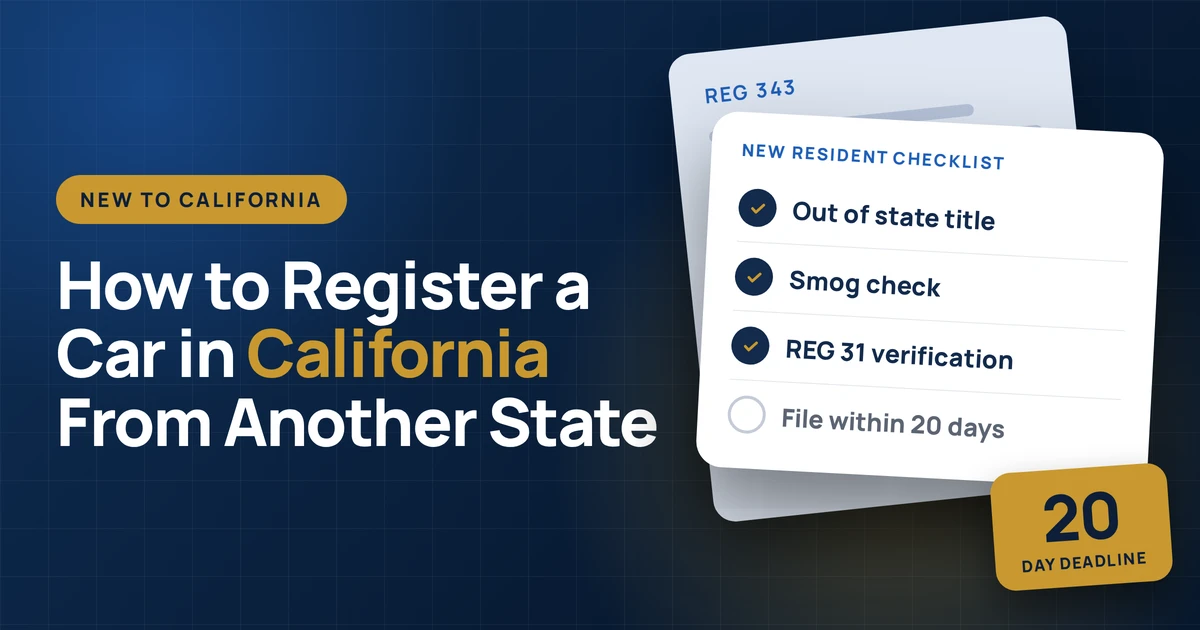
Moving a car to California comes with one deadline that surprises almost everyone: you have 20 days to register it. DMV counts those days from the moment you become a resident or bring the car into the state, and you can become a resident before you finish unpacking.
DMV says you are a California resident if you plan to live here for six months or more in a year. Other signs count too, such as taking a job, registering to vote, or getting a California license or ID card. Once any of these happens, the clock is running.
Here is the part that saves people money: send in your application and fees on time even if you are still missing the title or the smog certificate. DMV says that protects you from penalties, and you can finish the missing pieces after.
The Paperwork You Need, in One Place
Most people need five items. Collect them in this order, because the first two take the longest.
- A smog certificate from a California smog station, unless your car is exempt.
- A vehicle verification. An approved person inspects your car and signs REG 31.
- Your out of state title. Use the latest title issued by your old state.
- Your out of state registration. A current registration card or renewal notice works.
- An application. Every owner on the title signs REG 343, the Application for Title or Registration.
A few cars need more. DMV asks for an odometer disclosure on REG 262 when the car is under 10 model years old. It asks for a bill of sale on REG 135 when the person who sold you the car is not the owner named on the out of state title. Lost the title? Order a duplicate from the state that issued it, since DMV wants the title from your old state.
Check That California Will Accept Your Car
This is the step nobody warns you about. California has its own emission standards, and DMV cannot register a car that does not meet them. Open the hood and find the emission label. It should say the car conforms to California regulations, or that it is legal for sale in California.
Cars sold in the other 49 states may carry a federal label only. These rules apply most often when you buy a car out of state:
- A California resident cannot register a 49 state car that had under 7,500 miles when they bought it.
- If you are moving here, you can register a 49 state car that was first registered in your home state. Bring proof of that registration.
- A few exemptions exist, including cars that come through a divorce or inheritance, and cars that replace a California vehicle stolen or destroyed while you were away.
Direct imports from other countries follow their own rules. Contact the California Air Resources Board before you buy, because California cannot convert some of these cars at all.
Smog Check: Which Cars Need One
You need a smog certificate from a California station for these vehicles:
- Gasoline cars from model year 1976 and newer
- Diesel cars from model year 1998 and newer, with a gross weight under 14,001 pounds, including diesel hybrids
- Natural gas and propane vehicles under 14,001 pounds
Motorcycles do not need one. The certificate must come from a California smog station, so a passing result from your old state does not count. Start the smog check early. If the car fails, repairs take time, and your 20 days keep running.
Vehicle Verification With REG 31
Because your car has no California record, DMV wants someone to confirm that the car in front of them matches your paperwork. That check goes on REG 31. A DMV employee, a law enforcement officer, or a California licensed vehicle verifier can complete it.
The verifier looks at the VIN, the engine number, the odometer, and the safety and emission labels. You cannot fill it out yourself. A licensed verifier is usually the fastest route, and many will come to you. A DMV field office costs nothing but may need an appointment.
If You Still Owe Money on the Car
A lender who holds your title adds a step. The lender, which DMV calls the legal owner, must sign the title to release its interest, or sign a notarized REG 166. Call your lender before you move, tell them you are registering in California, and ask how they handle it. Some lenders take weeks to send a title, and your deadline does not pause.
Plates and Your Old Title
Turn in your out of state plates when you register, unless they have expired or your old state wants them returned. Give DMV your old title too. If you keep it, DMV marks your California registration card as nontransferable and issues no California title. That makes the car much harder to sell later.
What It Costs
You pay registration fees, a transfer fee, and use tax. DMV does not quote a single price, because the total depends on your vehicle and where you live, and it sets the exact amount when you submit your application. The DMV vehicle registration fee calculator on dmv.ca.gov gives a close estimate before you go.
Late payment costs more. DMV adds penalties when fees come in after the deadline, which is one more reason to file on day 19, not day 21.
Insurance and Your Driver License
California requires liability insurance on every vehicle driven or parked on its roads, so buy a California policy and keep proof in the car. New residents who drive also need a California license. If you have not applied yet, the DL 44 application is where that starts, and doing it in the same trip as your vehicle paperwork saves you a second visit.
After you move, tell DMV your new address as well. DMV 14 covers your license and your vehicles once the car has a California record.
Special Cases
- Leased cars. The leasing company signs REG 343 as the lessor, so contact them early.
- Trailers. Expect extra forms, including REG 256 and REG 4017.
- Heavy commercial vehicles. Over 6,001 pounds unladen, DMV asks for REG 4008.
- A car you bought from a private seller. Keep the bill of sale, and make sure the seller signs the title over to you.
Mistakes That Cost New Residents Time and Money
- Waiting for the smog certificate before filing anything
- Getting a smog check outside California
- Skipping the emission label check on a car bought in another state
- Forgetting that every owner on the title signs the application
- Assuming the lender will mail the title on its own
- Keeping the old title instead of handing it to DMV
- Letting the 20 days run while you wait for an appointment
Frequently Asked Questions
How long do I have to register my car in California after moving from another state?
You have 20 days from the day you become a resident or bring the car into California. Residency begins when you plan to live here for six months or more, so a new job or a California license can start the clock.
Can I drive with out of state plates after I move to California?
Only until your 20 days are up. After that, you need California registration. Keep your old plates on the car until DMV tells you to turn them in.
How much does it cost to register an out of state car in California?
You pay registration fees, a transfer fee, and use tax, and the total changes with your vehicle and county. Use the vehicle registration fee calculator on dmv.ca.gov for an estimate. DMV sets the exact amount when it receives your application.
Do I need a smog check to register an out of state car in California?
Most of the time, yes. Gasoline cars from model year 1976 and newer need one, and so do diesel cars from 1998 and newer under 14,001 pounds. The smog certificate has to come from a California station.
Do I need a REG 31 vehicle verification when I bring a car from another state?
Yes. DMV needs a DMV employee, a law enforcement officer, or a licensed vehicle verifier to inspect the car and complete REG 31. You cannot complete it yourself.
What if my bank or lender still holds the title?
The lender, as legal owner, has to release its interest. It signs the title or completes a notarized REG 166. Call early, because lenders can take a few weeks.
What if my car is a 49 state car and not California certified?
If you are moving here and the car was first registered in your home state, you can usually register it with proof of that registration. If you bought it after becoming a California resident and it had under 7,500 miles, DMV cannot register it unless an exemption applies.
Can I keep my car registered in my old state after I move to California?
Not once you are a resident. California expects you to register the car here within 20 days, and late registration brings penalties.