Your Name Stays on the Record Until the Buyer Acts
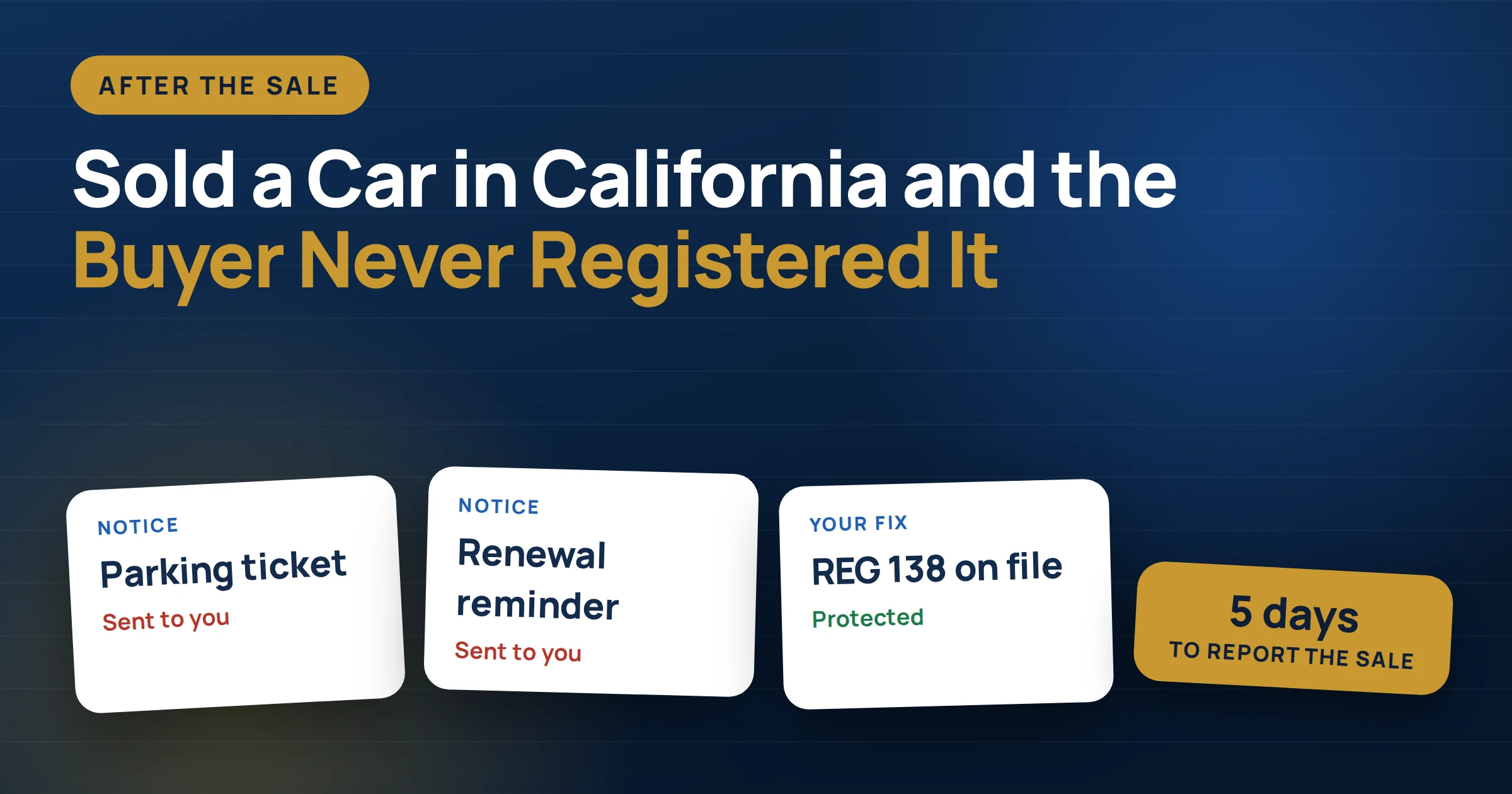
A parking ticket turns up in your mailbox for a car you sold weeks ago. Or a registration renewal notice arrives with your name on it. The buyer plainly never finished the paperwork, and now you’re wondering whether this is your problem. Usually you can protect yourself, even after you sold a car in California to someone who never followed through. It just helps to know which step does what.
Every private sale has two separate jobs. You tell DMV the sale happened, and the buyer applies to put the car in their name. Only the first job is yours, and it’s the one that keeps tickets away from you. If you’re not sure yours went through, start there. If the buyer has gone quiet, you still have options.
What the Release of Liability Protects, and What It Does Not
The Notice of Transfer and Release of Liability, known as the NRL or REG 138, is your protection. Once DMV has it, responsibility for parking violations, traffic violations, and civil lawsuits tied to the car moves to the new owner. Renewal notices stop coming to you too.
Know the limits, though. Filing the notice doesn’t transfer ownership, and it doesn’t take your name off the record. Only the buyer’s own transfer application, made with the title you signed, does that. DMV also says a court decides if you followed the rules and qualify for protection. So a filed notice helps a lot, but it isn’t a guarantee.
Check That DMV Has Your Release of Liability
Do this before you contact anyone. A notice that never went through is the first thing to rule out, and it’s the one thing you control.
- You filed online. Find the confirmation you saved. DMV says the record updates within one business day, and it tells you to print or save the confirmation as proof.
- You mailed the paper form. All you have is your own copy, because mail gives you no confirmation. If tickets or notices start arriving, treat a mailed notice as unproven.
- You’re not sure. File again online. DMV says that if renewal notices keep coming for a car you sold, you need to submit another notice. Don’t just resend your old confirmation.
You can also ask DMV for a copy of the notice you submitted. That takes a Request for Record Information, form INF 70, and a fee. Before you file again, check the buyer’s name, address, and sale date. Missing or unreadable details can stop DMV from updating the record.
If You Never Filed the Notice
File it today. DMV’s rule is 5 calendar days from the sale, and its pages list no fine for filing late. The cost is the protection itself: without a complete notice on file, DMV may not update the record, and you can lose the exemption. File online at dmv.ca.gov, save the confirmation, and enter the real sale date, not today’s date.
Once DMV has the notice, responsibility for new violations moves to the buyer. Tickets that already arrived still need an answer.
When the Buyer Never Registered the Car You Sold, Contact Them First
A short, polite message is the best first step. A buyer who put the paperwork off may only need a nudge. DMV says the buyer owes the transfer fees, due within 10 days, with penalties when payment misses 30 days, so you can mention that without any anger.
Send it by text or email so you keep a record, and keep it short and calm:
“Hi [name], this is [your name], who sold you the [car] on [date]. DMV needs you to transfer the title into your name, and the fees are due within 10 days of the sale. I filed my release of liability. Please let me know once you finish.”
If the buyer replies, ask for a screenshot of the DMV confirmation. If the buyer doesn’t reply, save the message anyway. It shows you tried.
When a Ticket or Notice Reaches You After the Sale
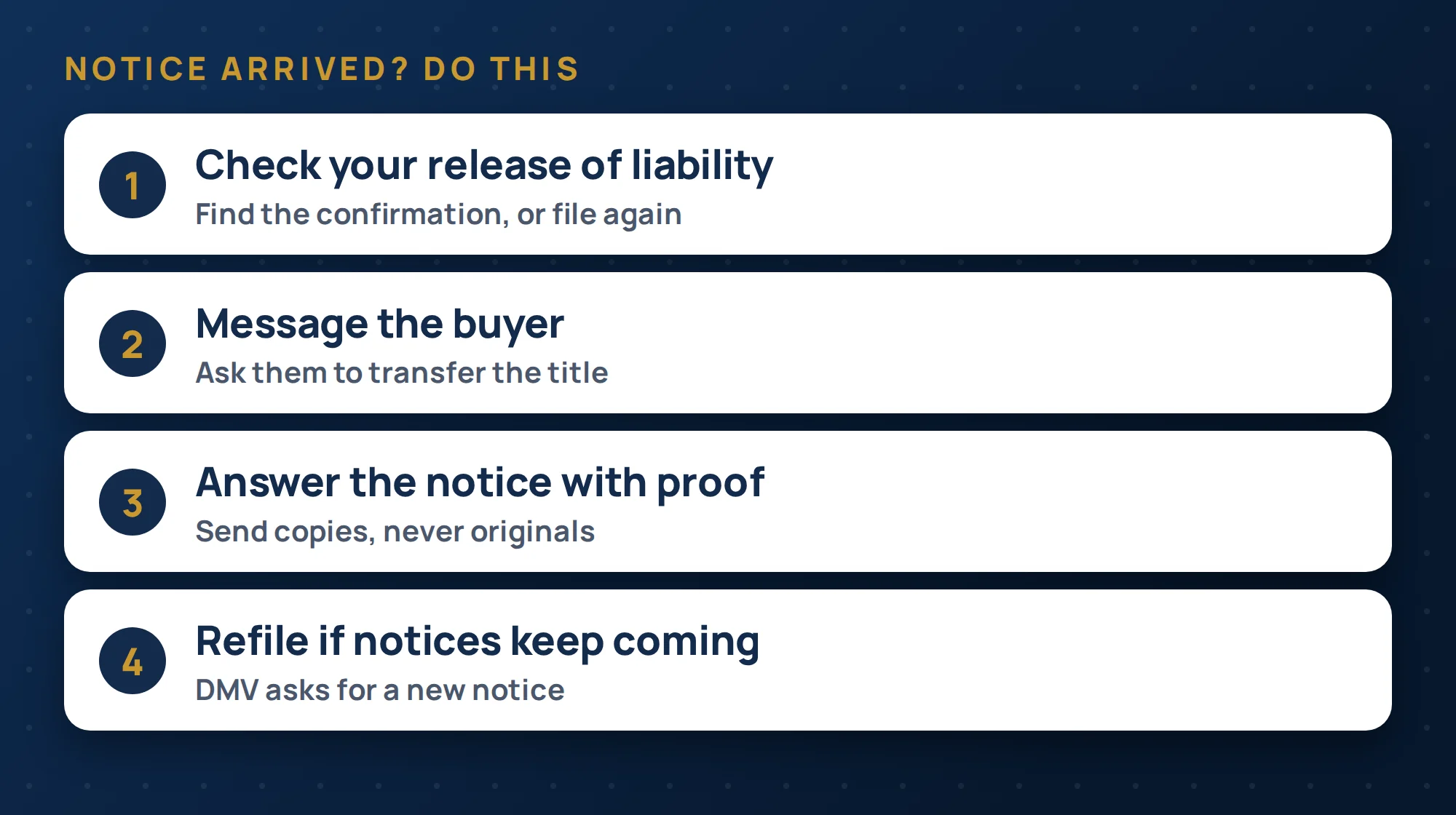
Don’t ignore it. Late fees can pile up on a notice you skip, even if the car is long gone.
- Read the dates. Find the date and time of the violation and compare it with your sale date. Then find the deadline to respond.
- Pull your proof. Your notice confirmation and your bill of sale matter most.
- Contact the agency on the notice. Tell them you sold the car, give the sale date, and attach copies of your proof. Never send originals.
- Follow the dispute steps on the notice. If the agency denies your first response, the notice explains how to appeal.
- File another release of liability if the notice came because DMV never got yours.
This page can’t give legal advice. If a notice threatens a court date or a large amount of money, talk to a traffic attorney.
Proof to Keep in One Folder
Gather these now, while the sale is still fresh. You may need them months later.
- Your release of liability confirmation, or your mailed copy
- The bill of sale with the sale date, the price, and the buyer’s name and address
- A copy of the signed title, front and back, taken before you handed it over
- A photo of the odometer on the day of the sale
- Texts or emails with the buyer
- Any ticket or notice you received, and your reply
Without a bill of sale, the sale date on your notice has nothing to back it up.
If You Cannot Reach the Buyer
DMV’s pages don’t describe any way for a seller to force a transfer, and you can’t finish the buyer’s application for them. Don’t spend weeks chasing someone who has stopped answering. Put that effort into protecting yourself.
- Make sure DMV has your notice, and refile it if notices keep coming.
- Answer every ticket with your proof, one at a time.
- Keep your messages to the buyer, because they show you acted.
- If the car was in a crash or a lawsuit names you, call your insurer and an attorney the same day. DMV says a court decides these cases.
Renewal notices that keep arriving suggest the transfer never happened, so keep an eye on your mail.
How to Sell a Car in California Without This Problem Later
- File the release of liability online on the day of the sale, not on day five.
- Sign the title and fill in the buyer’s name and the date yourself. Never hand over an open title.
- Write a bill of sale and give each person a copy.
- Take photos of the signed title and the odometer.
- Hold the title until the payment clears.
- Cancel your insurance only after the car leaves and the notice is on file.
Where Sellers Get Caught Out
- Trusting the buyer to file the notice for you
- Mailing the paper form and never checking that it worked
- Using a sale date that doesn’t match the bill of sale
- Misspelling the buyer’s name or address on the notice
- Ignoring a ticket because the car was not yours
- Sending original documents to an agency instead of copies
- Selling without a bill of sale
Frequently Asked Questions
Am I still liable if the buyer never registers the car I sold in California?
If DMV has your release of liability, responsibility for parking violations, traffic violations, and civil lawsuits after the sale moves to the buyer. Your name stays on the record until the buyer transfers the title, and DMV says a court decides if you qualify for protection.
How do I know if the buyer transferred the title?
DMV’s pages don’t list a seller tool for checking this. Renewal notices that keep arriving for the car are a sign the transfer didn’t happen. In that case, DMV says to submit another notice.
Can I file the release of liability after five days?
DMV sets a 5 calendar day deadline and lists no late fine. Without a complete notice on file, though, you can lose the protection, so file as soon as you notice the gap.
What do I do if I get a parking ticket for a car I already sold?
Compare the violation date with your sale date, then contact the agency on the notice with copies of your release of liability confirmation and your bill of sale. Don’t ignore the notice, because late fees can grow.
Does the release of liability remove my name from the title?
No. It protects you from later violations, but only the buyer’s transfer application takes your name off the record.
What if the car I sold was in a crash?
Call your insurer and an attorney right away. DMV says a court decides if you followed the rules and qualify for protection from civil claims, so your proof of sale matters.